Showing posts with label women's fiction. Show all posts

Straight From the Mouth of Women's Fiction Author Evy Journey


 The Inspiration Behind The Golden Manuscripts: A Novel

By Evy Journey

Are you ever curious how picture books and, by extension, even graphic novels, first began? Has it ever occurred to you that picture books might have illustrious beginnings?

Like most mothers, I read to my son when he was a boy, and I understand how wonderful children’s picture books can be. Pictures in books are not only entertaining, they also teach.

Today, we take picture books for granted. We love images. We whip out our cell phones and take pictures to preserve memories of instants in time.

I love illustrations in fiction and wish we did more of them. One of my favorites is an old almost tattered copy of a collection of Jane Austen’s novels featuring illustrations of scenes from her stories by a nineteenth century artist.  Before Masterpiece Theater and my exposure to films of 19th century England, these images shaped my limited conception of everything that was old English. Now, I have an ebook copy of an old illustrated Jane Austen collection.

When an art history class introduced me to manuscript illuminations, I was amazed at the thought that illustrated books likely have medieval beginnings dating back to Charlemagne’s reign in the 9th century. While he revived classical art, his most lasting achievement is the flourishing of picture bookmaking. Most people in the Middle Ages couldn’t read, so he championed the creation of picture books to teach them about God.

Historians called those early picture books illuminated manuscripts or manuscript illuminations. They were handwritten and illustrated on parchment (dried and stretched animal skins), often by the same creator who painted the pictures.

An illumination is a picture or illustration in a book that conveys the meaning of a piece of text. It’s “illuminated” through the use of gilding—gold or silver decorations on letters and figures.  In medieval times, these manuscripts represented a high art form.

This intro compelled me to do extensive research into illuminated manuscripts. One of the articles I unearthed told of an actual theft by an American soldier during WWII of a couple of these rare manuscripts. It was eureka moment. I was left with no choice but to write a story around this theft of illustrated books.

To make the story more intriguing, and in keeping with the overall theme of the second set of standalone novels in my Between Two Worlds series, I chose a young biracial heroine who’s rootless and anxious to find a home for herself. The product is a literary novel based on actual events, into which I’ve woven mystery, historical, and romance elements.

Pick Up Your Copy at Amazon

_____________________ 


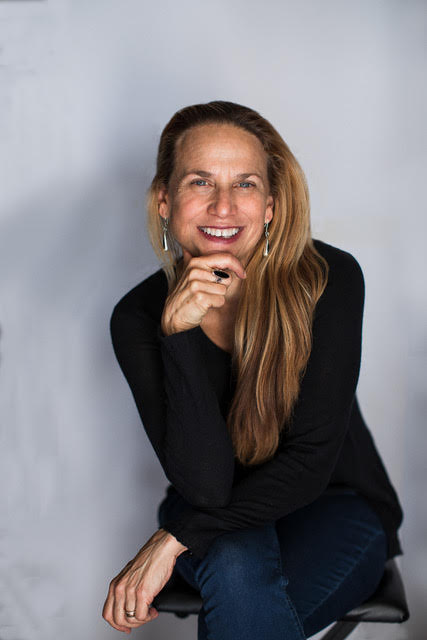
Evy Journey writes. Stories and blog posts. Novels that tend to cross genres. She’s also a wannabe artist, and a flâneuse. Evy studied psychology (M.A., University of Hawaii; Ph.D. University of Illinois). So her fiction spins tales about nuanced characters dealing with contemporary life issues and problems. She believes in love and its many faces. Her one ungranted wish: To live in Paris where art is everywhere and people have honed aimless roaming to an art form. She has visited and stayed a few months at a time.

Author Links  

Website | Facebook | Instagram | Goodreads


Straight From the Mouth of Women's Fiction Author Evy Journey


 7 Things You Might Not Know About The Shade Under the Mango Tree

  1. A small, short journal I unearthed from a box in my garage inspired me to use the epistolary device to tell much of the story.
  2. I’ve made the mango salad in the story using a Vietnamese recipe for green papaya salad, substituting green (unripe) mango for the green papaya.
  3. I usually situate my stories in places I’ve lived in or have visited. But I’ve never been to Cambodia, where half of the action takes place. To learn about Cambodia, I interviewed a young man who grew up in Cambodia and lived for a while in the west. I also read books and online articles about its current society and traditions, as well as the experiences of survivors of the Khmer genocide. I also watched a few movies.
  4. Two movies currently on Netflix depict the Cambodian genocide: Angelina Jolie’s First They Killed My Father and a French graphic animation, Funan. Maybe, the first film ever made of it is The Killing Fields (1984), about five years after this particular holocaust ended.
  5. Towards the middle of writing the story, I switched the male protagonist’s profession from computer science to architecture as a tribute to my husband’s frustrated wish to be an architect. He became a clinical psychologist, instead.
  6. I interviewed an architect from one of my Facebook groups to learn more about the profession. I also took a brief online introductory course on architecture.
  7. The coffeeshop where the protagonists meet is also featured in Books 4 and 6 in the series, Between Two Worlds. 

_____________________
 

Evy Journey writes. Stories and blog posts. Novels that tend to cross genres. She’s also a wannabe artist, and a flâneuse.

Evy studied psychology (M.A., University of Hawaii; Ph.D. University of Illinois). So her fiction spins tales about nuanced characters dealing with contemporary life issues and problems. She believes in love and its many faces.

Her one ungranted wish: To live in Paris where art is everywhere and people have honed aimless roaming to an art form. She has visited and stayed a few months at a time.

Website or Blog: https://evyjourney.net

Facebook: https://www.facebook.com/ejourneywriter/

Goodreads: https://www.goodreads.com/author/show/14845365.Evy_Jour

Purchase Information for The Shade Under the Mango Tree


Straight From the Mouth of Tracy Shawn


   10 Things You Might Not Know About Floating Underwater

By Tracy Shawn


Ten Things You Might Not Know About the Novel Floating Underwater

1. The first working title for Floating Underwater was The Girl from the Edge of the Ocean. Author Tracy Shawn decided that Floating Underwater was a bit more poetic, if not a lot shorter!

2. Sunflower Beach is a fictional beach town in Floating Underwater. It was inspired by the small beach towns near San Diego, California, where Tracy has enjoyed several beachside vacations. Also, Sunflowers are symbolic of the hope that we can turn to something bigger than ourselves (as the sunflower turns to the sun) and learn to embrace our authentic selves—themes that run through Floating Underwater.

3. Tracy Shawn named protagonist Paloma Leary’s husband Reed because he eventually learns to be less rigid and “bend with the wind,” as reeds naturally do.

4. Floating Underwater went through so many revisions that it took over nine years to complete. During the last two years that Tracy was working on it, her mom was diagnosed with uterine cancer and later died in 2020 (Floating Underwater was released in 2021). The scenes in which Paloma misses her mom hit Tracy that much harder, and she found that like her character Paloma, she, too felt connected with her mom’s spirit.

5. Tracy’s first childhood dog was named Bonnie and after Bonnie died, Tracy’s mom sang the song “My Bonnie Lies Over the Ocean” to try and make young Tracy feel better. That was one of the reasons Tracy Shawn included this song in her story, as it has always reminded her of love and loss.

6. Ramiro Summers was inspired by Tracy’s grandfather John, who was quite spiritual and often visited with ghosts over tea in his Devonshire cottage.

7. Tracy wrote Floating Underwater because she wanted to write about a character who is dealing with the grief of miscarriage, while at the same time, learning to accept a life that is different than the one she had planned.

8. The name Serena means calm and serene—and is also very similar to the word sirena, which is Spanish for mermaid.

9. Paloma’s spiritual crisis is due, in part, to her having held back her grief for too long.

10. The cover picture was created to depict a dreamlike state—much like Paloma’s visions.


Award-Winning Author Tracy Shawn lives and writes on the Central Coast of California. Her debut novel, The Grace of Crows, won several indie book awards. Floating Underwater is her second novel. Tracy Shawn’s short stories have appeared in Literary Brushstrokes, Psychology Tomorrow Magazine, and Steel House Review Literary Journal. She’s written numerous articles for print and online publications and is currently working on her third novel.

You can visit her website at https://www.tracyshawn.com/ or connect with her on Twitter, Facebook, and Goodreads.

Straight from the Mouth of Jonisha Rios, Author of 'Curse of the Blue Vagina'


Hi all!  I’m a Puerto Rican Latina from the Bronx, not to be confused with the fabulous Jlo although we do share the same size ass.  Very proud of that, can I get “woot woot”!
Okay okay, I’m not actually from the Bronx originally but I did live there for over ten years before I moved to Cali and my name is Jonisha Rios.

 I’m thrilled to be sharing some words of wisdom on my journey from the stage to becoming a published author.   Some would say I did this process backwards. In other words, many writers first have their material in book form before they proceed to have it staged or even filmed. However, for me there was no other way. You see my goal was to have the experience of living these stories and producing them for the stage first.  And in some cases even directing them, and then once I did that, I believed the book would naturally follow.   I took to the stage worked out my material and then, chiseled it into what became “Curse of the Blue Vagina” A collection of two solo-shows transformed into narratives, followed by an ensemble piece I produced and directed. I never set out to “get published” or even “find an agent”, in fact- they found me after I decided to just do it on my own.

When I began this journey almost ten plus years go, I was traveling back and forth from the east coast to the west coast doing show after show and just working to make each one better.  It was my art, my expression. I did it for me and it was a bonus that people came to watch and many enjoyed my pieces. 

If I were to give any advice it would be “If you build it, they will come.” True, you may have heard this old saying time again- only in my case it was exactly what I did.  I was never one to wait for anyone to “open my doors.” So many people out there are waiting for their “Big Break”. But its bullshit, you can’t wait.  If you really want to act, learn how to write and write yourself something. Or hire me to help you.   

I remember I was shooting a movie in Italy and one of the actresses scoffed at me when she read the beginnings of my works that eventually became the material I used for my book. She said “Oh you do stand up? And solo-shows? You aren’t a talent.” Mind you I was starring in the movie she helped me get a role in. It was so odd.  I will never forget how rude she was. But I didn’t let her get me down, because I was clear.  So rule number: Be Clear about your gift and don’t allow anyone to bring you down, what they think of you and is not your concern, its their problem.  Stay focused. Thank God I felt sorry for her and kept on going. A few years later not only did my shows become successful, but I landed two TV series, sold a screenplay, directed countless commercials and was paid big bucks to help others create their own solo-shows.  And that same girl eventually reached out to me for advice later on.  No hard feelings, glad I inspired her. My point is, I knew where I was headed and didn’t let anything or anyone stop me.

To be clear, I didn’t do it to prove the haters wrong – and that’s a very important message from me to you. Do it because you love it and what you create is your passion. Period. No one can stop you from doing what you are meant to do, because if you are destined to do it. 

They say it’s always important to do that which makes you afraid. And for me that thing was stand up comedy.  In fact before I took the stage as a stand up comedian I actually did solo shows first to be able to conquer that fear. It was difficult to go from elaborate monologues to short set up punches –but I did it.  Was it easy? —Hell to the no! But I did it.  So do what scares you. Create your bucket list.
Now that I’m a mom and a little older wiser, I have really taken to writing.  No need to be on stage anymore.  I conquered that fear and moved on.  Don’t get me wrong I wouldn’t necessarily turn down a role on Broadway; however, I am at peace with writing and creating new stories with characters that make me laugh. 

Ok enough with the inspirational pep talk, here are some hardcore rules.  Hire a book formatter ASAP.  For me formatting was an absolute nightmare that took way longer than it needed to.  Mainly because I wrote my book in "Word" which apparently is a pain to format.  The thing is, once I got the book formatted properly, errors jumped out at me that I never noticed after having the book copy edited several times.  I was shocked and annoyed and it was a very expensive process to fix.  So when your manuscript is complete have it checked several times by many different people  for 1) grammar, 2) spelling, 3) spacing, 4) indents—the works- get it proofed for everything again and again before you get into formatting so that when you convert the file you don’t need to fix a thing.  I tell you this because the formatters will make errors – so long as its theirs and not yours those are easy to find and free to fix.

Get professional photos taken, I had nothing because after I had given birth my focus was my son and at almost 200 pounds going from a sassy size 2 to a 10 plus… meat I didn’t want to take photos and frankly I didn’t care – being a mom was a dream just like being an artist was so I was fine with my weight.  The thing is I had no pro shots. So the photo I used in the back of my book, although I love it, it was a photo shoot from when my baby was teeny.  Hey it worked but now I need to do a photo shoot to get some new press photos - be prepared.

Have different readers read your stories.  Meaning don’t just go to readers that are your typical audience branch out, the notes I received from so many different people early on was invaluable because they were all from completely different walks of life and had different perspectives. 

Finally, once your have proofed and had others read your stories and once you feel the project is done-- move on.  Tell people who have more things to say or more notes to give “Thanks but this book is officially done, but I so appreciate your advice and will consider it for my next book.” This is so important, why? Because you are an artist and because as a writer especially a self-pub writer, you can write and re-write to death.  Believe me this book took 8 years to complete.  Yup, you heard that, 8 years! And it’s a collection of stories.  Don’t do that to yourself.  You want to put your best foot forward, and you also want to appreciate the fact that you have more stories in you – new ones that need to be told.  So when its time to let that go- let it go.  I for one will not be reading my own book again.  I did it, I read it I will produce plays from it but I have moved on.

Anyway, that’s all I got.  My son is finally asleep so that means, I get to have a glass of wine and just chill.  Goodnight! Read my book! Thanks for your support.

ABOUT THE AUTHOR


Jonisha Rios is an accomplished screenwriter, author, director and actress that currently resides in California. She teaches Solo-show workshops to adults and kids. 

Check her book on www.CurseoftheBlueVagina.com 

Straight from the Mouth of Lynn Steward, Author of 'What Might Have Been'

Lynn Steward, a veteran of the New York fashion industry and a buyer on the team that started the women’s department at Brooks Brothers, created the Dana McGarry series, set at a transformational time in the 1970s world of fashion and in the lives of multigenerational women. What Might Have Been is the second volume in the series. A Very Good Life, Steward’s debut novel, was published in March 2014.


Questionnaire:

Thanks for letting us interrogate you!  Can you give us a go-for-the-gut answer as to why you wanted to be an author?

I always enjoyed business-related writing and thought a non-fiction self-help book, with life-lessons I learned along the way, would be a fun project.  But, as often happens when you put yourself out there, I discovered another path and took it: I developed a TV pilot about New York in the seventies because, as they say “Write what you know” and I know New York. I’m a native of Long Island, and between attending school and working, I spent twenty-two years in Manhattan. I was so overwhelmed with ideas, the TV series expanded to five seasons! Appropriately placed in the New York City of 1975, which was International Women’s Year, the plots in the series intermingle fashion legends, business icons, real events, and untold stories, providing a behind-the-scenes look at inspirational women in the worlds of art, fashion, and business.
Somewhere along the way, I realized that the main character, Dana McGarry, needed more drama and the plots had to be developed, and I felt the best way to do that was to write a novel.  A Very Good Life, inspired by the pilot and season one, was published in 2014. What Might Have Been is based on season two.                                   
Tell us (we won’t tell promise!) is it all it’s cracked up to be?  I mean what are the perks and what are the demands?

After two careers in competitive, fast-paced industries, I have found writing to be the most relaxing and pleasant work I have known. Ideas for stories develop as I research real life female characters in the worlds of fashion, art, and business and events in the archives of newspapers and magazines. Once a flicker of a story is sparked, I can spend endless enjoyable hours developing plots and characters on the page. The only demands are the ones I put on myself; overall, it is the most wonderful experience.

Which route did you take – traditional or self-published – and can you give us the nitty gritty low down on what’s that like?

I self-published What Might Have Been, as I did A Very Good Life. I spent three years researching, developing and writing before volume one was finished, so by then, I was ready to publish. I knew it could take years to find an agent, and more time to be picked-up by a traditional publisher.  In preparation, I did extensive research on the self-publishing process, and found bloggers tremendously helpful. I also hired a good team: a graphic designer, a formatting company, two editors, a proofreader, and a lawyer to vet the manuscript. The Amazon community was great and responsive, and the whole process went smoothly. I am grateful for the opportunity to self-publish, and I appreciate the opportunity to be discovered by a traditional publisher if I am successful on-line. I also happen to have a strong marketing background and am not only knowledgeable about design, I enjoy the creative process. Even so, I have a graphic designer to help me as there is just never enough time to do it all. Social media and promotion are crucial and must be done regularly before and after publishing if you want your book to be discovered.  I strongly recommend hiring the right people if you can’t do it yourself.
Tell us for real what your family feels about you spending so much time getting your book written, polished, edited, formatted, published, what have you?

I do not have children, very few family distractions, and understanding friends. The good news is that I manage my own time, the bad news is that, without boundaries, I don’t know when to take a break.

In writing your book, how did you deal with the phone ringing, your family needing dinner or your boss calling you saying you’re late?

I turn off my cell phone, and put it in another room. I skip dinner many nights.

What was the craziest or insane thing that happened to you in the book publishing process?

I’m happy to say all went smoothly and I kept my sanity.

How about the social networks?  Which ones do you believe help and which ones do you wish you could avoid?

I try to keep my Facebook page current, I have over 500 Likes, and I work on Pinterest every morning. I haven’t been too active on Twitter.  However, I don’t think social networks are working that well for me. I will be hiring a consultant for advice. Another learning curve in the world of self-publishing!

Book sales.  Don’t you just love them (or lack of?)?  How are you making the sales happen for you?

Sales are good when I take advantage of Amazon’s promotions, but, as I have read repeatedly, the more books available, the better the sales. I am hoping that What Might Have Been will increase sales of book one, A Very Good Life.

What is one thing you’d like to jump on the rooftop and scream about?

I was number one for twenty-six hours on Amazon’s list of Top 100 Free Books.
I was watching the list on my iPad while I was working at my desk, and saw that A Very Good Life was number 42, then every time I glanced at the screen, it was running up the chart. When it reached number five, I thought, OMG, could it really….and then it hit the top….and sat at number one for twenty six hours over Memorial Day weekend. BTY…free books are a must if you want to garner reviews.


Okay, too much sugar for you today!  Here’s a nice cup of Chamomile tea and come on over and sit under the cabana and watch the waves roll in.  Now…can you tell us what you love about being a published author and how all those things above doesn’t matter because it’s all part of the whole scheme of things and you wouldn’t have it any other way?

I love the independence, the solitude, and the creative process.


Straight from the Mouth of Marie Bacigalupo, Author of 'Ninth-Month Midnight'

When Marie Bacigalupo was nine, she read Louisa May Alcott’s Eight Cousins and was instantly hooked on fiction. She grew up to teach high school English before focusing exclusively on fiction writing, studying under Gordon Lish at The Center for Fiction, taking classes at the Writers Studio, and attending a number of university-sponsored craft workshops.

Marie won First Prize among 7000 entries in the Writer’s Digest 13th Annual Short-Short Story Competition with her entry, “Excavation.” Her other works have appeared in The Brooklyn Rail, Vol. 1 Brooklyn, Journal of Microliterature, The Examined Life Journal, Romance Magazine, and elsewhere. Ninth-Month Midnight is her debut novella.

The author is a native New Yorker who lives and writes in Brooklyn. Visit her at : www.mariebacigalupo.com.

Find out more on Amazon. 

Questionnaire:

Thanks for letting us interrogate you!  Can you give us a go-for-the-gut answer as to why you wanted to be an author?

Reading and writing have always been my main passions (cerebrally, that is!). I escaped a lonely childhood by eagerly entering a multitude of fictional worlds, and to this day I keep re-reading my favorites.

I had to work a little harder at writing. After earning an M. A. cum laude (the M.F.A. was not widely offered at the time), I worked as a copywriter for a couple of years. But my dream was to write creatively, and I realized I couldn’t seriously tackle fiction unless I addressed my shortcomings in craft. The fix: I went back to school, so to speak.

I attended The Writers Studio, took a number of workshops at NYU and The New School, studied at the Center for Fiction, and participated in Narrative Magazine and One Story summer programs. This background, along with the publication of my short stories, gave me the confidence to write a book.
         
Ninth-Month Midnight focuses on a woman who, grieving for her dead child, develops a desperate attachment to a male psychic. The first draft was the hardest. Helping me over the rough spots were some words of wisdom that never fail me: Allow yourself to write garbage, said the wise person whose name I can’t remember. In other words, just get the words on paper. Once purged, I searched for kernels of value that I could expand and revise into a finished manuscript.

Here’s the short answer to your question: one of the reasons I wanted to be an author was that fiction allowed me to express myself, to deal creatively with compelling ideas and issues, like the nature of life and the possibility of an after-life. For Ninth-Month Midnight, I asked myself: What if the souls of the dead linger among us for a while? Would we be able to communicate with them on some level?
         
Another idea I wanted to probe involved the inner life of women. I think their strengths are too often unacknowledged, their feelings and judgments too often dismissed, and their spirit too often crushed by socially defined limitations. My book combines the idea of a spirit world with the story of a troubled woman who develops a desperate attachment to a male psychic.

Tell us (we won’t tell promise!) is it all it’s cracked up to be?  I mean what are the perks and what are the demands?

One obvious perk is the freedom to work when, where, how it suits me, in pj’s or buck naked if the spirit moves me (and . . . ahem . . . no one else is around). Most important, however, is the exhilaration I feel when my work is published and I can see and touch what my creative throes labored into being.

One of the demands of the writing life is the flip side of its freedom. Since there’s no one telling me what to do, I have to discipline myself by developing routines that maximize productivity. 

My daily routine gets me up around 7:00 a.m. If family obligations don’t interfere, I write for a couple of hours in the morning. After a late lunch break, I return to the computer for another hour or two. If the writing goes very well—and this is rare—I’ll write continuously for five hours.

Marketing a book is also demanding, especially since I’m a private person, an introvert really. The necessity of promoting Ninth-Month Midnight and engaging with readers through social media was hard for me in the beginning, as was asking for reviews. I had to shake the feeling that I was imposing on my readers’ time because, let’s face it, the most saleable book in the world won’t sell a single copy if your readers don’t know it exists.

Still, despite its demands, I’d have to say the writing life definitely is all it’s cracked up to be.

Which route did you take – traditional or self-published – and can you give us the nitty gritty low down on what’s that like?

When I had the final draft of Ninth-Month Midnight in hand, I thought about shopping out the manuscript. I weighed the prestige of traditional publication against reports about the difficulty of getting past the gatekeepers. I had also read that traditional publishers considered only agented manuscripts and were providing less and less support in promotion and marketing.

Self-publication, on the other hand, had significant advantages. Besides putting the writer at the helm, it’s relatively quick to pull off. The turn-around between manuscript upload and Amazon epublication is about 24 hours; the CreateSpace paperback is ready in two or three days. That’s a lot sooner than the yearlong wait between contract signing and publication by the Big Five.

Another advantage: self-published authors exercise control over content and pricing; their royalties go as high as 70% of sales (as opposed to about 25% minus the agent’s fee).

The balance tilted in favor of the direct approach: I decided to self-publish through Amazon and its paperback arm, CreateSpace. I accepted the fact that my book would probably never grace the shelves of a retail store without the mojo of a traditional publisher.

It was obvious from the beginning that professionalism would be the key to my credibility as a serious author. I knew I didn’t have certain technical skills to go it alone, so I searched the Internet for people who could assist me and who charged reasonable rates. Ultimately, I hired Polgarus to do the layout for my book and Ellie Augsburger of Creative Digital Studios to create the cover.

Once Ninth-Month Midnight was available for purchase, promotion became critical to sales. To let people know about the book, I established a website and blog, created author pages on Goodreads and Facebook, opened a Twitter account, and did a virtual blog tour. My challenge now is to maintain a media presence that leaves me enough time to write.
         
To authors who ask if I would recommend self-publication, I say, Go for it if you’re organized and multi-talented, or willing to hire people to do what you can’t do yourself. However you take the journey, success depends ultimately on the three p’s: patience, persistence, and professionalism.
Tell us for real what your family feels about you spending so much time getting your book written, polished, edited, formatted, published, what have you?

For real, my husband is proud of my publications and seems fine with watching a ball game, if he has to, while I’m working.

If my husband questions anything, it’s my reading habits. He wonders how I can keep reading the same books over and over. I tell him I like to hang out with old friends like Elizabeth Bennett, Holden Caulfield, George Smiley, and the list goes on.

Oh, yes, he does occasionally express dismay when he compares the amount of work I do with the amount of profit I make. But then, so do I!

This is for pet lovers.  If you don’t own a pet, skip this question, but do your pets actually get their food on time or do they have to wait until you type just one more word?

While I don’t live with a pet at the moment, I was once the guardian of a cat named Ariel, whose death after fourteen years pierced my heart.

As I worked, Ariel would lie at the side of the computer while I absentmindedly stroked her back, her purrs lulling me into a creative daydream, her serene presence erasing petty distractions.

Ariel never showed impatience; on the contrary, her stillness was unflappable as long as I was working. She was a boon, never an impediment, to my writing life.

This is for plant lovers.  If you don’t own a plant, skip this question, but if you do, are they actually still alive?

I was born and bred in New York City, so plants haven’t been a big part of my life. Be it noted, however, that the poinsettia plant I bought before Christmas is still thriving, and I think know why. Like my writing life, I integrate watering the gorgeous red blooms into a daily routine: I boot up my computer, then a swig of Evian for me and a swig for the pretty plant.

In writing your book, how did you deal with the phone ringing, your family needing dinner or your boss calling you saying you’re late?

Routine. Routine. Routine. My family knew when I was writing and didn’t disturb me. I didn’t turn off the phone because I feared an emergency. Instead, I let someone else pick it up or excused myself and, when appropriate, promised to call back later.

As for dinner, my husband is the cook in our family (I shrewdly burned one too many dinners), so there’s never an argument about mealtimes in our house.

What was the craziest or insane thing that happened to you in the book publishing process?

I needed to change an ISBN on the epub version of my book. I discovered the error at the same time as the formatter’s wife took ill and had to go to the hospital. The formatter was, understandably, distraught. I couldn’t persuade him to make a change that would have taken two or three minutes, and I couldn’t wait for his wife to recover because I wanted the epub and mobi versions to appear simultaneously. 

I considered using Calibre and making the change myself, but I didn’t know the program and was sure I’d bungle the effort. I wanted the book to look professional.

In desperation, I searched the Internet, and though I can’t retrace my route today, I found a young guy who took care of the problem for $15, but by then I had decided to forgo the epub version.

P.S. The formatter got back to me with the correction after the book was published.

How about the social networks?  Which ones do you believe help and which ones do you wish you could avoid?

Most, I think, are worthwhile.

For sheer audience mass, Facebook serves writers well. I like Goodreads because it’s dedicated to books and authors although it’s so feature-rich, it can be intimidating.

I like Twitter, too, and should use it more, but sometimes the 140-character limit deters me. Mark Twain, who said, “I didn't have time to write a short letter, so I wrote a long one instead,” knew what I’m talking about.

Book sales.  Don’t you just love them (or lack of?)?  How are you making the sales happen for you?

To make sales happen, I started by writing the best book I could. Then I worked with an illustrator to produce the best cover, a critical promotional tool. I hired a professional to do the formatting and another to create my website.

After the book was published, I tried to drum up interest through social media. Later, I did a short-term price reduction through Amazon to encourage sales.

I also tried to make it easy for readers to purchase my book by offering it through three outlets: Amazon, Goodreads, and my website (www.mariebacigalupo.com).

So how are my sales? Don’t ask!

What is one thing you’d like to jump on the rooftop and scream about?

Hmmm. Is that a scream of joy or frustration? I screamed for joy when my book finally came out. I screamed in frustration when the writing was going poorly, when I couldn’t get the dialogue right, when the structure wasn’t working, when the Are you kidding? voice sounded inside my head, as in,  “Are you kidding, taking yourself seriously?”

Writing is hard work. From the outside, it might look easy, but, in fact, it’s a struggle to align words with ideas, forge credible characters, and shape engaging plots. To those onlookers who say, I can do that, I want to scream, Prove it! Sit down day after day, month after month gestating a novel, and don’t stop till the baby is born. You may succeed in producing a book, but I guarantee you’ll never again call it easy.

Okay, too much sugar for you today!  Here’s a nice cup of Chamomile tea and come on over and sit under the cabana and watch the waves roll in.  Now…can you tell us what you love about being a published author and how all those things above doesn’t matter because it’s all part of the whole scheme of things and you wouldn’t have it any other way?

I love generating situations in which recognizable people, people like us, feel joy and pain, face surmountable and insurmountable problems, do good and evil.

I love the fact that readers take pleasure in the company of characters I created, that they respond to their plights with real emotion.

I love populating a reader’s imagination with worlds that did not exist before I put pen to paper or, rather, fingers to computer. It’s magical, a little like playing God.


Straight from the Mouth of 'April Snow' Lynn Steward

Lynn Steward is a successful business woman who spent many years in New York City’s fashion industry in marketing and merchandising, including the development of the first women’s department at a famous men’s clothing store. Through extensive research, and an intimate knowledge of the period, Steward created the characters and stories for a series of five authentic and heartwarming novels about New York in the seventies. April Snow is volume two in the Dana McGarry Series.  A Very Good Life was published in March 2014.


Questionnaire:

Thanks for letting us interrogate you!  Can you give us a go-for-the-gut answer as to why you wanted to be an author?

I always enjoyed business-related writing and thought a non-fiction self-help book, with life-lessons I learned along the way, would be a fun project.  But, as often happens when you put yourself out there, I discovered another path and took it: I developed a TV pilot about New York in the seventies because, as they say “Write what you know” and I know New York. I’m a native of Long Island, and between attending school and working, I spent twenty-two years in Manhattan. I was so overwhelmed with ideas, the TV series expanded to five seasons! Appropriately placed in the New York City of 1975, which was International Women’s Year, the plots in the series intermingle fashion legends, business icons, real events, and untold stories, providing a behind-the-scenes look at inspirational women in the worlds of art, fashion, and business.
After meeting with professionals in the entertainment industry, I realized that the main character, Dana McGarry, needed more drama and the plots had to be developed, and I felt the best way to do that was to convert the pilot into a novel.  A Very Good Life, inspired by the pilot and first season, was published last year. My new novel, April Snow, is based on season two.                                   
Tell us (we won’t tell promise!) is it all it’s cracked up to be?  I mean what are the perks and what are the demands?

After two careers in competitive, fast-paced industries, I have found writing to be the most relaxing and pleasant work I have known. Ideas for stories develop as I research real life female characters in the worlds of fashion, art, and business and events in the archives of newspapers and magazines. Once a flicker of a story is sparked, I can spend endless enjoyable hours developing plots and characters on the page. The only demands are the ones I put on myself; overall, it is the most wonderful experience.

Which route did you take – traditional or self-published – and can you give us the nitty gritty low down on what’s that like?

I self-published April Snow, as I did A Very Good Life. I spent three years researching, developing and writing before volume one was finished, so by then, I was ready to publish. I knew it could take years to find an agent, and more time to be picked-up by a traditional publisher.  In preparation, I did extensive research on the self-publishing process, and found bloggers tremendously helpful. I also hired a good team: a graphic designer, a formatting company, two editors, a proofreader, and a lawyer to vet the manuscript. The Amazon community was great and responsive, and the whole process went smoothly. I am grateful for the opportunity to self-publish, and I appreciate the opportunity to be discovered by a traditional publisher if I am successful on-line. I also happen to have a strong marketing background and am not only knowledgeable about design, I enjoy the creative process. Even so, I have a graphic designer to help me as there is just never enough time to do it all. Social media and promotion are crucial and must be done regularly before and after publishing if you want your book to be discovered.  I strongly recommend hiring the right people if you can’t do it yourself.
Tell us for real what your family feels about you spending so much time getting your book written, polished, edited, formatted, published, what have you?

I do not have children, very few family distractions, and understanding friends. The good news is that I manage my own time, the bad news is that, without boundaries, I don’t know when to take a break.
  
Are your plants actually still alive?

Few plants, some survive.

In writing your book, how did you deal with the phone ringing, your family needing dinner or your boss calling you saying you’re late?
I turn off my cell phone, and put it in another room. I skip dinner many nights.

What was the craziest or insane thing that happened to you in the book publishing process?

I’m happy to say all went smoothly and I kept my sanity.

How about the social networks?  Which ones do you believe help and which ones do you wish you could avoid?

I try to keep my Facebook page current, I have 509 Likes, and I work on Pinterest every morning. I haven’t been too active on Twitter.  However, I don’t think social networks are working that well for me. I will be hiring a consultant for advice. Another learning curve in the world of self-publishing!

Book sales.  Don’t you just love them (or lack of?)?  How are you making the sales happen for you?

Sales are good when I take advantage of Amazon’s promotions, but, as I have read repeatedly, the more books available, the better the sales. I am hoping that April Snow will increase sales of book one, A Very Good Life.

What is one thing you’d like to jump on the rooftop and scream about?

I was number one for twenty-six hours on Amazon’s list of Top 100 Free Books.
I was watching the list on my iPad while I was working at my desk, and saw that A Very Good Life was number 42, then every time I glanced at the screen, it was running up the chart. When it reached number five, I thought, OMG, could it really….and then it hit the top….and sat at number one for twenty six hours over Memorial Day weekend. BTY…free books are a must if you want to garner reviews. 

Okay, too much sugar for you today!  Here’s a nice cup of Chamomile tea and come on over and sit under the cabana and watch the waves roll in.  Now…can you tell us what you love about being a published author and how all those things above doesn’t matter because it’s all part of the whole scheme of things and you wouldn’t have it any other way?

I love the independence, the solitude, and the creative process.